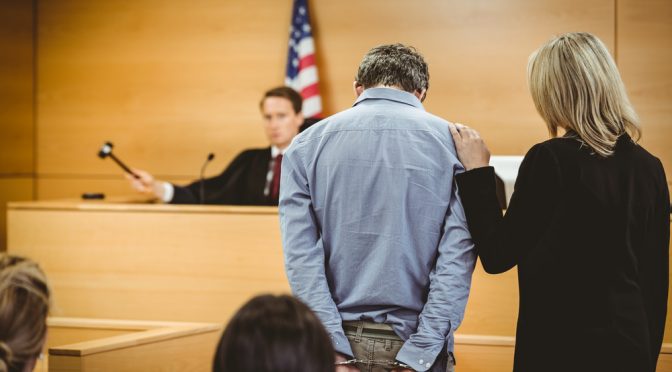
A criminal trial is the formal process through which the court determines whether a defendant is guilty or not guilty of a charged offense. While procedures vary slightly by jurisdiction, the core structure of a criminal trial remains consistent. Understanding each stage helps clarify what happens in court and why every step matters.
Below is a clear, step-by-step explanation of the criminal trial process.
1. Investigation and Arrest
The process typically begins with a criminal investigation. Law enforcement officers:
- Gather physical evidence
- Interview witnesses
- Review surveillance or digital records
- Identify suspects
If sufficient evidence exists, an arrest may occur. In some cases, authorities obtain an arrest warrant from a judge. After arrest, the suspect is taken into custody and informed of the charges.
2. Charging Decision
Prosecutors review the evidence collected by law enforcement. They determine:
- Whether there is probable cause
- Which specific criminal charges to file
- The severity of those charges
In serious felony cases, a grand jury may review evidence and issue an indictment.
3. Initial Appearance and Arraignment
At the initial court appearance:
- The charges are formally read
- The defendant is informed of legal rights
- Bail or release conditions are addressed
During the arraignment, the defendant enters a plea:
- Guilty
- Not guilty
- No contest (in some jurisdictions)
If a not guilty plea is entered, the case proceeds toward trial.
4. Pretrial Proceedings
Before trial, both sides engage in preparation and procedural steps, including:
Discovery
The prosecution and defense exchange evidence. This may include:
- Police reports
- Witness statements
- Expert reports
- Physical or forensic evidence
Motions
Attorneys may file motions to:
- Suppress improperly obtained evidence
- Dismiss certain charges
- Limit testimony
Pretrial hearings allow the judge to resolve legal issues before trial begins.
5. Jury Selection (Voir Dire)
If the defendant has the right to a jury trial, the court selects impartial jurors through a process known as voir dire.
Attorneys for both sides question potential jurors to identify bias or conflicts of interest. Each side may:
- Request removal of jurors for cause
- Use a limited number of peremptory challenges
The goal is to assemble a fair and unbiased jury.
6. Opening Statements
Once the jury is sworn in, the trial begins with opening statements.
- The prosecution outlines its case and the evidence it plans to present.
- The defense provides its theory of the case and highlights weaknesses in the prosecution’s claims.
Opening statements are not evidence; they are roadmaps of what each side intends to prove.
7. Presentation of Evidence
This stage forms the core of the trial.
Prosecution’s Case-in-Chief
The prosecution presents evidence first, including:
- Witness testimony
- Expert analysis
- Documents and physical evidence
The defense has the right to cross-examine each witness.
Defense Case
After the prosecution rests, the defense may:
- Present its own witnesses
- Introduce evidence
- Challenge credibility
The defendant is not required to testify and cannot be forced to do so.
8. Closing Arguments
Both sides summarize the evidence and argue how the jury should interpret it.
- The prosecution must prove guilt beyond a reasonable doubt.
- The defense emphasizes inconsistencies, lack of proof, or alternative explanations.
Closing arguments aim to persuade the jury before deliberation begins.
9. Jury Instructions and Deliberation
The judge provides instructions explaining:
- Applicable laws
- Legal standards
- Burden of proof
The jury then deliberates privately. They review evidence, discuss testimony, and attempt to reach a unanimous verdict (in most jurisdictions).
Possible outcomes include:
- Guilty
- Not guilty
- Hung jury (no unanimous decision)
10. Verdict
Once deliberations conclude, the jury returns to the courtroom and announces the verdict.
- A not guilty verdict results in acquittal.
- A guilty verdict moves the case to sentencing.
- A hung jury may lead to a retrial.
11. Sentencing
If convicted, the court schedules a sentencing hearing. The judge considers:
- Sentencing guidelines
- Aggravating or mitigating factors
- Victim impact statements
- Defendant’s background
Penalties may include:
- Fines
- Probation
- Community service
- Imprisonment
12. Appeals
After conviction and sentencing, the defendant may file an appeal. An appellate court reviews whether:
- Legal errors occurred
- Constitutional rights were violated
- The trial process was fair
Appeals do not involve new evidence but focus on legal procedure.
Frequently Asked Questions (FAQs)
1. How long does a criminal trial typically last?
The duration depends on the complexity of the case. Some trials last a single day, while others may continue for weeks or months.
2. Can a case end before reaching trial?
Yes. Many criminal cases resolve through plea agreements, dismissals, or diversion programs before trial begins.
3. What happens if a juror becomes unavailable during trial?
Depending on the situation, an alternate juror may replace them. If no alternates remain, a mistrial could occur.
4. Is the defendant required to testify?
No. The defendant has a constitutional right not to testify, and the jury cannot interpret silence as guilt.
5. What is the burden of proof in a criminal trial?
The prosecution must prove guilt beyond a reasonable doubt, which is the highest standard in the legal system.
6. Can new evidence be introduced during an appeal?
Generally, no. Appeals focus on reviewing legal errors made during the original trial, not introducing new facts.
7. What is a mistrial?
A mistrial occurs when a trial is invalid due to significant procedural error or a hung jury, often resulting in a new trial.
Understanding the criminal trial process reduces uncertainty and highlights the structured safeguards built into the justice system. Each step—from investigation to appeal—serves a defined purpose in ensuring fairness, accountability, and due process.